


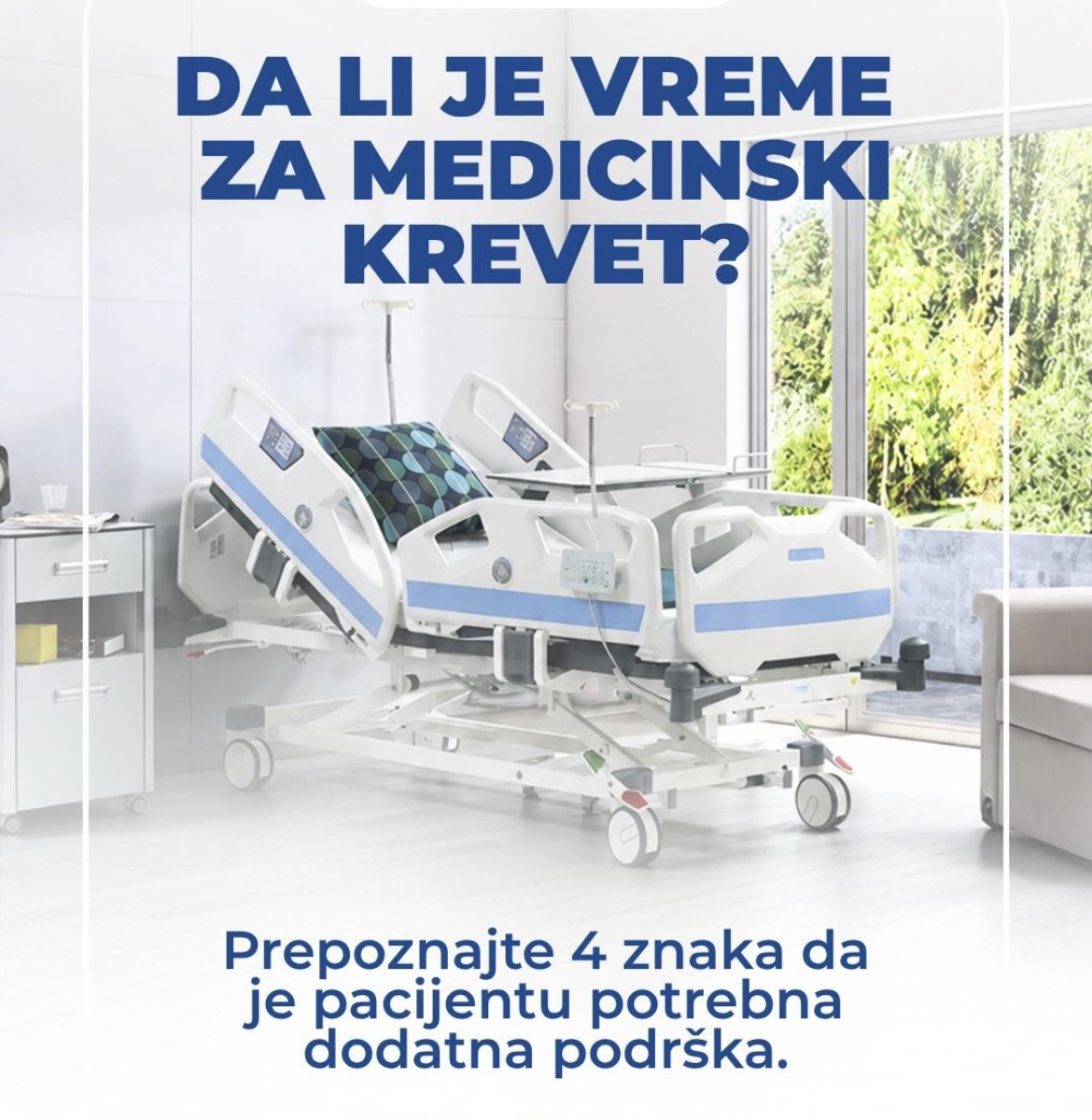
Caring for someone who spends most of the day in bed is one of the hardest tasks a family can face. At first everything is improvised — extra pillows, help from relatives, adapting an ordinary bed. Over time, however, the ordinary bed becomes a limitation: the patient struggles to change position, the caregiver's back suffers, and the risk of pressure sores rises by the day. At that point a medical bed stops being a luxury and becomes an essential aid that protects the patient's health and the family's strength.
Below are four clear signs that it's time for a medical bed, plus practical advice on choosing the model that best fits your situation.
Sign #1 — The patient can no longer stand up or turn without help
The first and most obvious sign is when the person can no longer get up from bed, roll onto their side or pull themselves into a sitting position. Regular beds are low, have no arm support and are often too soft — every movement becomes exhausting for patient and helper alike. A medical bed solves this with adjustable height, electric backrest elevation and side rails the patient can hold onto to pull themselves up. Some independence returns, and the caregiver's spine is spared.
Sign #2 — Care, changing and hygiene are becoming exhausting
When routines like changing pyjamas, changing bed linens, bed baths or feeding start taking longer and wearing the whole family out, that's a clear sign the regular bed no longer works. A medical bed rises electrically to a height that suits the caregiver, so changing and hygiene no longer require bending and lifting. Less back pain for the person caring — more dignity for the person cared for.
Sign #3 — The patient spends most of the day lying down
Long periods in the same position dramatically increase the risk of pressure sores (decubitus), and impair breathing, digestion and circulation. Within two to three weeks of immobility the first signs appear — redness on the back, sacral area or heels. A medical bed lets you change position and elevate legs or torso at the touch of a button, and combined with an anti-decubitus mattress it drastically reduces pressure on contact points. Elevating the head makes breathing easier for patients with heart or lung problems and makes feeding safer.
Sign #4 — Rising risk of night-time falls and incidents
For older adults and dementia patients, trying to get up at night often ends in a fall — with hip, wrist or head injuries that can decisively worsen the overall condition. A medical bed has adjustable side rails that prevent falling out, and a low night position further reduces the impact if the person still tries to stand. For the family that means a calmer night and the reassurance that a loved one won't suffer a serious injury while everyone sleeps.
Key benefits of a medical bed
- Electric height and headrest adjustment — comfort for the patient, protection for the caregiver's back.
- Side rails — prevent falls at night and help with position changes.
- Compatibility with anti-decubitus mattresses — direct prevention of pressure sores.
- Wheels with brakes — the bed moves easily inside the room for bathing or cleaning.
- Trendelenburg and anti-Trendelenburg positions — help with breathing, circulation and digestion.
- IV pole holder and trapeze — practical accessories for longer care.
Who especially benefits from a medical bed
- Patients after a stroke, hip fracture or major surgery.
- Older adults with reduced mobility and a fall risk.
- People with neurological conditions (dementia, Parkinson's, MS).
- Palliative patients for whom every millimetre of comfort matters.
- Families caring at home for a bedridden loved one who want to protect their own health.
Buy or rent a medical bed?
If the need is temporary — for example during recovery from surgery or a fracture — renting is almost always the more sensible option. You get professional equipment plus delivery and installation to your home, and once recovery is complete you simply return the bed with no storage headaches. For long-term care, renting also makes sense: no large upfront investment, and the bed can always be swapped for a newer model as the patient's condition changes.
OrtoRent delivers medical beds across Montenegro — from Podgorica through Nikšić to Bar, Budva, Kotor and Herceg Novi. Our team helps you pick a model that fits the patient's weight, the room and the type of care you provide at home.
You don't buy a medical bed because of illness — you buy it for the patient's dignity and the family's peaceful sleep.